Don't waste your data
Your business is sitting on answers it's never read. Every quote, job, invoice, roster and timesheet has been quietly filing itself away for years — and the most action it gets is the occasional panic-filter before a meeting.
And it's not just the money stuff. Your safety incidents, risk assessments, quality checks and inspection records are data too — and they're usually the data that costs you the most when nobody's reading it.
The shelf problem
For decades we've been obsessed with collecting data. Sometimes we actually turn it into something useful — but most often it sits like the proverbial folder on a shelf gathering dust. In modern times it gathers kilobytes in an Excel spreadsheet instead.
The hostage problem
Hosted systems love your data so much they won't let it leave. Getting a good report out of one can be a one-to-four week development exercise — by which time the question you were asking has already been answered by gut feel.
The IT degree problem
There are genuinely great tools around — Microsoft ships some beauties. But at times you feel like you need an IT degree just to build something simple. So the simple thing never gets built, and the data keeps gathering kilobytes.
Turn it into interactive analytical dashboards
Not a static report that was out of date before the PDF finished saving. A live, interactive view of your own numbers that draws out conclusions — and, just as valuable, raises the questions that move your business forward. The kind of questions like why does our busiest crew make the least margin? and which customers order less every quarter and nobody noticed?
This isn't new territory for us. We've understood data since the days of the chi-square homogeneity test — back when "the cloud" meant weather. The tools have changed. The discipline of asking whether the numbers actually mean something hasn't.
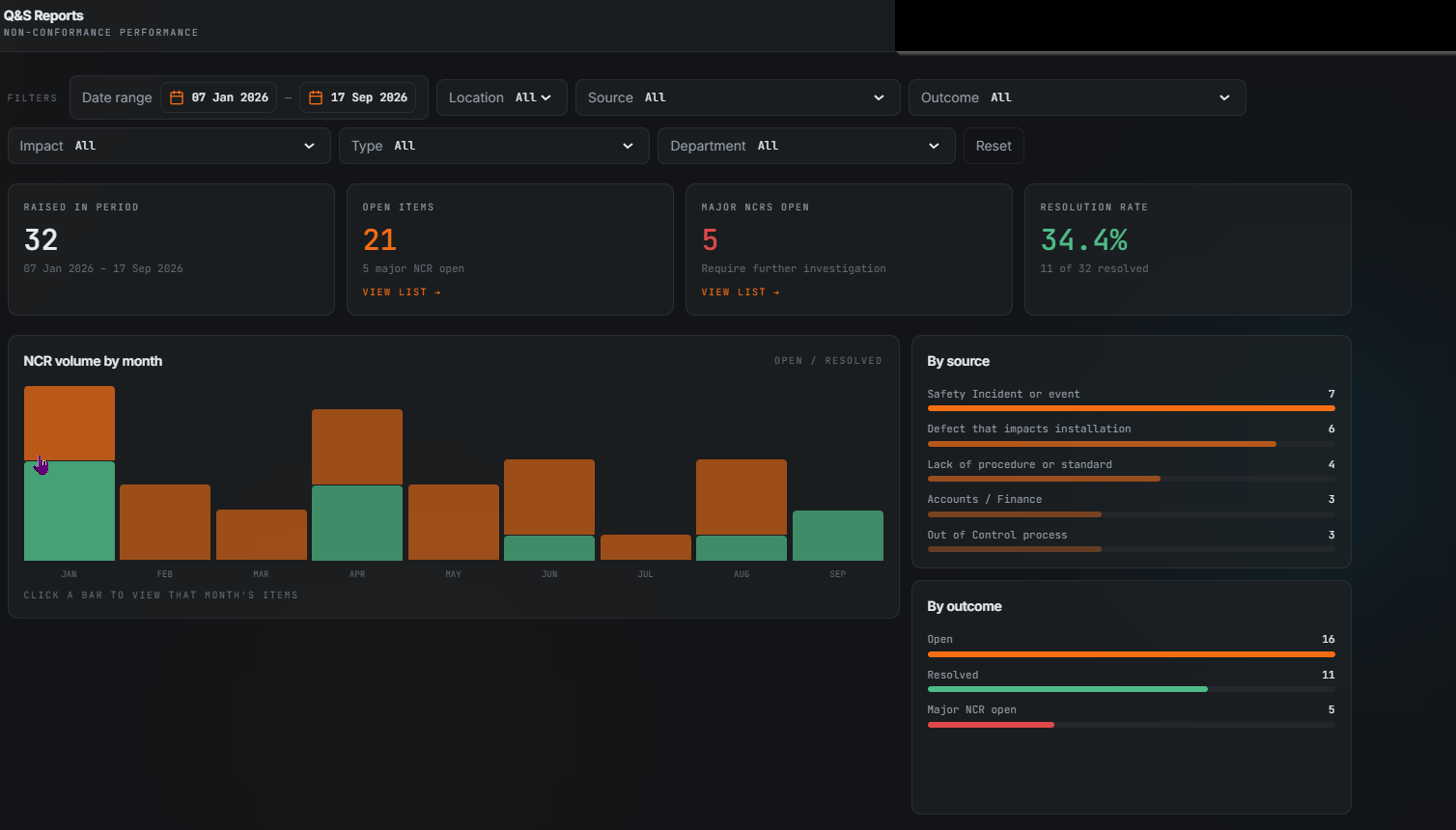
Safety, risk and quality databases count too
When people hear "business data" they think sales and invoices. Some of the most expensive data in the building lives somewhere else entirely:
- Safety — incident registers, hazard reports, near-misses, toolbox talk records. The trends in there tell you where the next lost-time injury is lining up.
- Risk — risk assessments, SWMS, rescue plans (rope access), permit logs. Which controls keep getting ruled out, which sites keep scoring high, which assessments haven't been reviewed since they were written.
- Quality — inspection and test records, checklists, non-conformance reports, rework logs. The rework alone is usually enough to pay for the dashboard.
These databases get treated as compliance paperwork — filed because someone has to. Blend them with your job and financial data and they start answering different questions: which crews, sites or clients quietly generate the incidents, the non-conformances and the margin leaks at the same time.
Send us the data you wish you could get to
That export you've been meaning to do something with. The spreadsheet with 40,000 rows and no conclusions. The report the hosted system won't give you. The incident register, the inspection records, the risk assessment tracker. Attach it below and we'll make it make sense.
We'll do the first one for free — or your money back. Which, at zero dollars, is the easiest guarantee in the industry. We can afford to be confident: we know what a data set wants to say before we've opened it twice.
- 01
We open your file and find the story it's been holding back.
- 02
You get an interactive dashboard that answers the question you asked — and flags the ones you didn't.
- 03
If it's useful, we talk about making it permanent. If it's not, you've lost nothing but a few kilobytes of dust.
Want the bigger picture on how we build systems around how your business actually runs? See F4P Business Systems.